 Eleanor Vance5 min read
Contemporary interior design prioritizes calmness, spatial clarity, and unbroken surfaces. Traditional light fixtures often compete with architectural lines, creating visual noise and unwanted glare. When you conceal the actual source of illumination, the focus shifts entirely to the quality of light and the architecture it reveals.
By embedding illumination directly into structural boundaries, rooms appear larger, ceilings feel taller, and finishes take on added depth. Achieving this effect requires precise planning, the right hardware, and an understanding of how light interacts with drywall and plaster.
Why modern interiors favor invisible illumination?
Direct light bulbs and exposed fixtures project intense brightness directly into human sightlines. This sharp contrast often produces uncomfortable glare, forcing your eyes to constantly adjust between bright spots and deep shadows. Invisible lighting solves this challenge by directing photons onto surrounding surfaces before they reach your eyes.
Eliminating visible lamps also removes decorative clutter. Instead of searching for pendant fixtures or wall sconces that might clash with your furniture, you let the architecture serve as the luminaire. The space feels inherently quiet and expansive, providing a clean canvas where minimalist furnishings, textured wall coverings, and natural materials can take center stage.
Furthermore, hidden light highlights volume rather than physical objects. When surfaces glow with uniform, diffuse brightness, room perimeters blur. This optical phenomenon makes compact urban apartments and expansive residences alike feel open, inviting, and thoughtfully proportioned.
Architectural advantages of flush ceiling installations
Ceilings are often referred to as the fifth wall, yet they frequently end up cluttered with junction boxes, surface tracks, and downlight bezels. Flush ceiling installations clear away these disruptions, turning flat expanses into monolithic planes of continuous light.
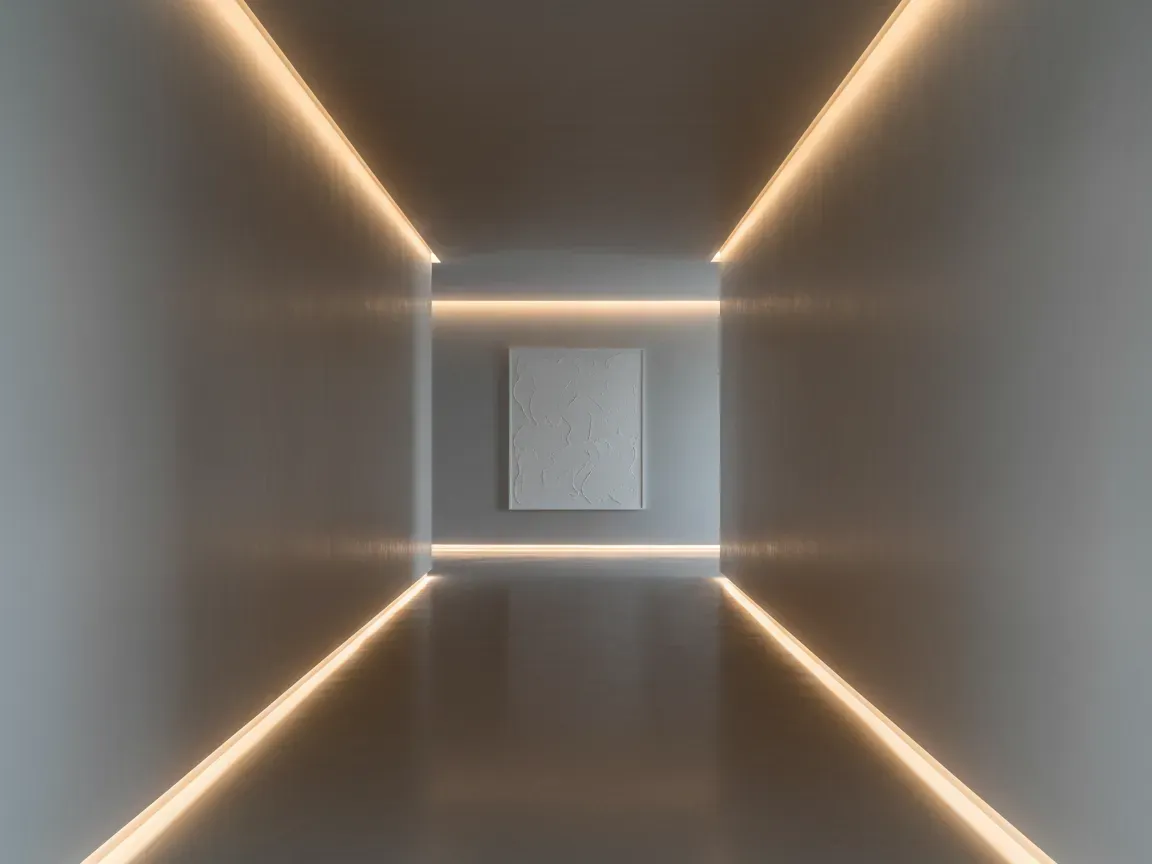
One of the most effective techniques involves carving razor-thin channels that run parallel to primary circulation paths or framing beams. When turned off, these channels look like intentional architectural reveals or crisp shadow gaps. When illuminated, they project an even, glare-free wash that distributes lumens evenly throughout the floor plan.
Perimeter wash configurations provide another dramatic advantage. By casting light downward from a recessed cove or ceiling edge, you draw the eye vertically. This technique visually lifts lower ceilings, making standard eight-foot rooms feel substantially taller while washing accent walls in soft, atmospheric brightness.
Creative ways to embed hidden lighting in drywall partitions
Drywall partitions present exceptional opportunities for integrating vertical and horizontal illumination without encroaching on floor space. Rather than hanging sconces that protrude into narrow hallways, you can embed light directly within the wall structure.
Consider running continuous vertical light slots between floor and ceiling at corner transitions. This placement softens harsh geometric edges and introduces soft ambient brightness to transitional areas. In corridors, recessed horizontal light bands installed at handrail height guide movement naturally through the home, doubling as low-glare night lights.
Another compelling application is creating a floating wall effect. By terminating a drywall partition just an inch above the floor and recessing the light behind a deep shadow reveal, the entire partition appears to hover weightlessly. This technique works exceptionally well around central service cores, media walls, and entry foyers.
Choosing the right channels and diffusers for a flawless finish
Achieving completely concealed illumination demands purposeful hardware designed specifically for mud-in installation. Standard surface channels leave an exposed aluminum flange, which ruins the seamless aesthetic you want to achieve.
A dedicated recessed LED profile with perforated wings allows plastering compounds to bond directly over the metal edges right up to the lens opening. This drywall-in design ensures the metal housing disappears entirely behind a smooth layer of joint compound, leaving only a sharp, borderless aperture.
Diffuser selection is equally critical. To eliminate visible diode spotting, choose high-density LED strips with at least one hundred and twenty diodes per meter, or opt for continuous chip-on-board tape. Pair these with frosted or opal polycarbonate diffusers that sit deeply within the profile. Deep-set diffusers hide the lens surface from standard viewing angles, ensuring that onlookers notice only a soft, mysterious glow.
Best practices for seamless plastering and maintenance access
Precision during the rough-in stage determines the final quality of your recessed installation. Aluminum channels must be fastened securely to drywall framing studs or solid backing rather than depending solely on gypsum board. Any flex in the structure will eventually cause hairline cracks along the plastered edge.
During mudding and taping, apply fiberglass mesh tape over the perforated wings of the channel. Use lightweight joint compound in multiple thin coats, feathering the edges at least ten to twelve inches into the adjacent drywall plane. Protect the interior of the channel with disposable foam inserts or painter tape throughout the sanding and painting process to keep the optical cavity pristine.
Long-term maintenance also requires strategic foresight. Always locate remote LED power drivers in an accessible closet, utility cabinet, or service panel rather than burying them behind drywall. High-quality LED strip lights rarely fail, but electronic power supplies carry limited operational lifespans and must remain easily serviceable without damaging your finished walls.
How to design cohesive indirect lighting schemes for every room?
Applying hidden illumination successfully across your home requires tailoring the placement and color temperature to each room purpose. In living areas, perimeter ceiling coves paired with warm twenty-seven-hundred-kelvin illumination generate an intimate, relaxing atmosphere suitable for entertaining or evening unwinding.
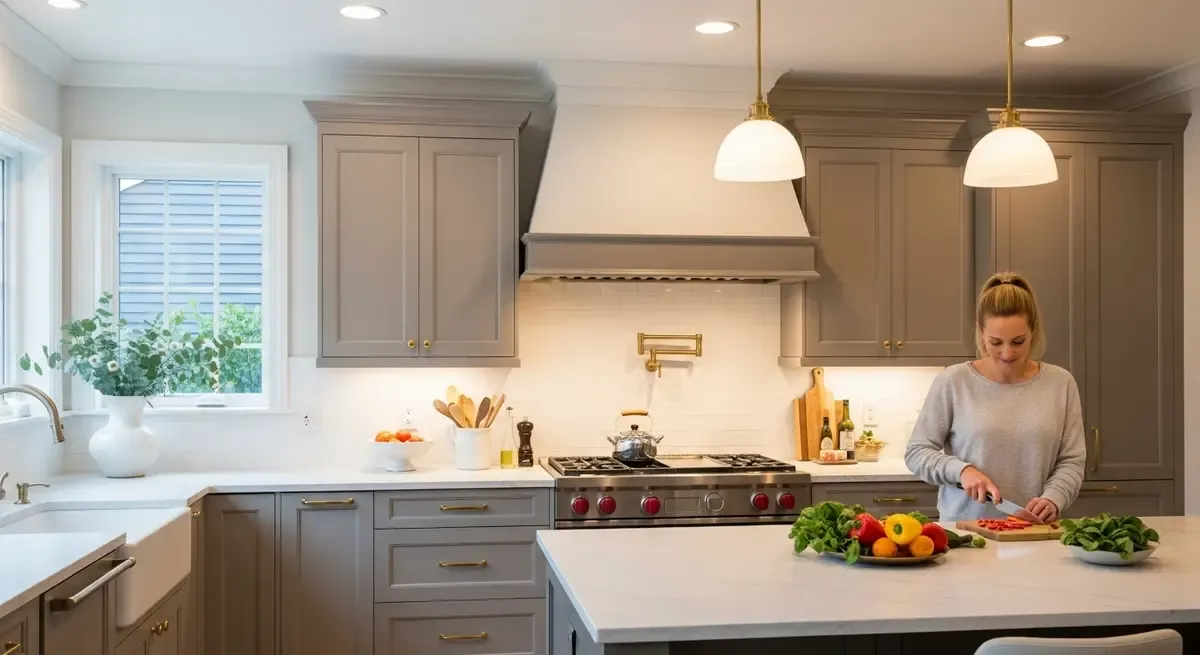
In kitchens and dining zones, integrate concealed channels under floating soffits or into breakfast bar kickboards. This provides functional task illumination while preventing sharp shadows across countertop workspaces. Combining clean white light around food prep zones with dim-to-warm perimeter channels allows you to transition seamlessly from cooking to dinner conversation.
Bathrooms benefit enormously from indirect wall reveals installed beside vanity mirrors and beneath floating cabinetry. By directing light toward adjacent tiles rather than straight into the mirror, you eliminate unflattering facial shadows while cultivating a calm, spa-like environment.
Transforming spaces through invisible architectural light
Integrating flush, concealed lighting redefines how you perceive and interact with your living environment. Removing visible fixtures transforms raw architecture into a self-illuminating sculpture where surfaces, textures, and subtle transitions define the interior mood.
Investing care into proper drywall integration, high-grade trimless extrusions, and accessible remote drivers guarantees a clean finish that retains its structural integrity over time. The result is a home that feels naturally bright, open, and permanently free from visual distraction.