 Chloe Anderson4 min read
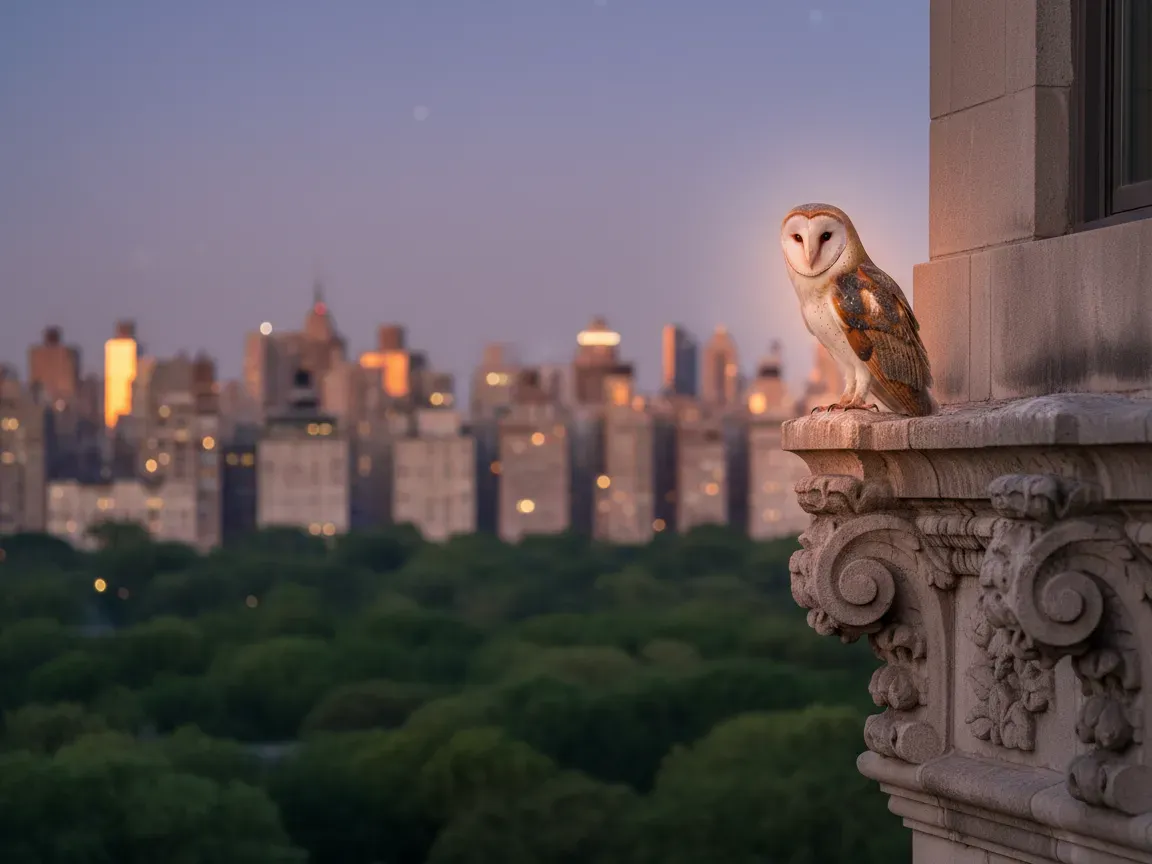
A family of barn owls has settled on the Upper West Side, creating one of the most remarkable wildlife records in modern New York City history. Local birders and naturalists believe this may be the very first documented barn owl nesting attempt in Manhattan in generations. In an ecosystem dominated by glass towers, subway noise, and heavy vehicle traffic, the presence of these pale, heart-faced raptors raises fundamental questions about how wild predators interact with America’s densest urban core.
A Historic Arrival on the Upper West Side
Barn owls are legendary hunters, but they typically prefer open meadows, agricultural barns, and marshy coastal edges. While birders frequently spot them in outer boroughs like Queens or coastal sections of Brooklyn, their presence in dense residential neighborhoods of Manhattan is practically unheard of.
The Upper West Side offers an unusual microclimate thanks to its proximity to both Central Park and Riverside Park. Mature trees, open lawns, and sprawling prewar building cornices mimic the cavity nesting sites these birds rely on in rural woodlands. Finding an active family unit here confirms that these raptors can locate quiet sanctuaries right in the center of bustling residential blocks.
Why Are Barn Owls So Rare in Modern Manhattan?
Surviving in Manhattan presents extreme structural obstacles for cavity-nesting birds. The natural resources that wild raptors depend on are heavily fragmented across the island.
- Cavity loss: Modern building maintenance seals off structural nooks, chimneys, and church eaves where barn owls traditionally hide.
- Artificial light: High-intensity streetlights disrupt the pitch-black conditions that barn owls require for hunting success.
- Secondary poisoning: The city’s reliance on rodenticides creates a lethal food chain risk for any animal feeding on urban mice and rats.
- Window collisions: Reflective high-rise glass poses a fatal navigational hazard, especially during sudden maneuvers.
Because barn owls hunt purely by specialized acoustic cues rather than keen daytime eyesight, the constant roar of traffic also impairs their ability to locate prey through low-level rustling in park underbrush.
Adapting to Concrete: How Raptors Survive the Urban Jungle
Despite these hazards, raptors in New York City have proven to be exceptionally resourceful opportunists. Peregrine falcons nest on suspension bridges, and red-tailed hawks famously raise chicks on Fifth Avenue window ledges. For a barn owl family, the abundant rodent population in city parks represents an endless, reliable food source.
Urban hunting requires behavioral shifts. Successful city owls learn to hunt later in the night when human foot traffic decreases. They exploit artificial wind currents between tall buildings and rely on shadowed courtyards where ambient city illumination fails to reach. Their arrival demonstrates that apex predators will consistently colonize metropolitan areas as long as a stable prey base exists.
How Can You Ethically Observe New York City’s Wild Neighbors?
When extraordinary wildlife appears in Manhattan, crowds inevitably follow. Protecting nesting owls requires discipline and restraint from curious park visitors and nature photographers alike.
- Keep a wide perimeter: Never approach an owl roost close enough to cause the bird to adjust its posture or open its eyes wide in defensive alarm.
- Never use flash photography: Bright flashes permanently disorient nocturnal raptors and can cause young birds to tumble from nest ledges.
- Keep exact locations private: Avoid posting precise GPS coordinates or specific cross streets on public social media forums to prevent dangerous crowding.
- Leave audio lures at home: Playing recorded owl calls stresses territorial parents and distracts them from feeding their young.
Maintaining distance guarantees that the adult birds can hunt undisturbed, which is crucial for the survival of vulnerable chicks during their early development weeks.
What This Rare Nesting Means for NYC’s Natural Future?
The appearance of barn owls in Manhattan serves as an essential barometer for the health of city parklands. When high-level predators successfully establish breeding territories, it proves that local green spaces are supporting complete trophic webs beneath the canopy.
This milestone also highlights the urgency of eliminating anticoagulant rat poisons across residential neighborhoods. Switching to mechanical traps, secure trash containment, and organic pest management directly protects the very birds that provide free, natural pest control throughout the city.
Coexisting With Wild Predators in the Five Boroughs
The presence of a barn owl family on the Upper West Side proves that urban spaces and wild ecosystems do not have to exist in direct opposition. Even in a landscape built of steel and pavement, natural instincts persist, driving specialized species to claim whatever shelter they can find.
Protecting these unexpected visitors depends entirely on individual human choices. By keeping our distance, securing our waste, and rethinking how we manage urban pests, we make room for nature to thrive alongside millions of daily commuters. Every successful fledging season reminds us that New York City remains a living, breathing habitat capable of astonishing wildlife discoveries.